Thursday, November 21, 2013

A manuscript Kinah (lament) for an unrecorded pogrom: 2nd day of Pesah, 1655 in Poland

Bound at the ends of an 18th century Sultzbach Mahzor, I found a contemporary manuscript bound in, containing a lengthy Kinah for those murdered in a pogrom. The Kinah describes in graphic terms the way the Jews were murdered, including the names of the Jews murdered as well. I searched the classic references on the period and found no mention of this specific pogrom.
The Kinah describes the pogrom as starting on the second day of Passover in the year 1655, throughout the cities of Poland.
"ר יצחק אב"ד שהיה בקי בתורה......ופצעו את מוחו וקרע את זקנו והשליחו אותו מן החלונות על אשפה"
"Rabbi Yitzchak, the head of the Bet Din, who was an expert in the Torah... they wound his head, ripped his beard and threw him from the windows to the trash"

"רבי ישראל שהיה מזרע הלוים ושמו אש וגפרית האכזרים על לבו הזידונים ויצאה נשמתו בפסוק שמע ישראל"
"Rabbi Israel who was from the tribe of the Leviites, the enemies placed fire and sulfur on the heart, and his soul exited as he said the verse Shema Yisrael"

"כהר"ר מרדכי שכתב ספר תורה הקדושות על הגוילים ומעליהים עשו האויבים סנדלים"
"Rabbi Mordechai, who wrote Holy Sifre Torah on parchments, and from them the enemies made sandals"

There is currently a debate between Scholars when exactly did the pogroms associated with the Khmelnytsky Uprisings end, starting in 1648, some Polish Historians(1) put the end of the pogroms at 1654, this manuscript would seem to prove otherwise. Most Historians today put the end of the Pogroms at 1657.

Of interest, is the high use of vocabulary but almost no use of Hebrew Grammar in the vowelization. The vowels seemed to be written in at a later date, and use a Polish Yiddish pronunciation. Many words are voweled in a Yiddish distortion of the Hebrew word, such as the word Ashpeh, in modern Hebrew it would be pronounced Ashpah, and many other such examples.

תהא נשמתם צרורה בצרור החיים


 1. see here


The Chofetz Chaim's dedication to his American Distributor of the Mishnah Berurah: Abraham Meyers


dedication to Meyers

In 1901 the first volume of the Mishnah Berurah was republished, with an interesting dedication on verso of title page. The Chofetz Chaim dedicates the book to Avraham Meyers of New York, who accepted upon himself the task of distributing the Chofetz Chaim's works in the United States, for no financial reward. Also noted in the dedication are supporters in London and South bend Indiana.

It appears that the Mishnah Berurah got around and became popular rather fast, at the time of the publishing of this volume in 1901, the 5th and 6th parts of the Mishnah Berurah have not even been published yet.

hat-tip: M. Rogosnitzky

Sunday, November 17, 2013

The Ban on pilgrimage to to the tomb of Ezra Hasofer in Tidif, near Aleppo, Syria in the year 1775 - 2 takes on the outcome

In recent years, the massive pilgrimage to the kever of Rashb"i in Meron every year on Lag Baomer has been occasionally banned, by various Rabbis and Hasidic sects. Last year, the Viznitz Rebbe forbade his hasidim to make the journey. The reason usually given is the lack of modesty and mingling of men and women in such places.

There is an interesting precedent to this, which occurred in Syria in 1775, with 2 versions of the outcome of the story written by 2 great Aleppo Rabbis. The events leading up to the ban are described in great detail by Rabbi Avraham Antebi (1765-1858), who was appointed as Chief Rabbi of Aleppo in 1817, in his Sefer Ohel Yesharim (Leghorn 1843). Rabbi Antebi describes how it was the custom of Syrian Jews to visit the synagogue where it was believed that Ezra Hasofer visited (some legends have it buried) which was located outside of the city walls, in an area full of gardens and orchards. All women with any sickness or troubles in the family would pledge to visit and donate to the synagogue and it was proven to work. The people used to visit the place on Shabbat as well, and being an open place, the Shabbat was desecrated as they would carry food and drinks with them on Shabbat though there was no Eruv. Aside from this, the good atmosphere encouraged people to drink, and getting drunk, they at times, coming to great sins.

Rabbi Shmuel Laniado among other Rabbis made a ban against making a pilgrimage to the Synagogue of Ezra Hasofer because of the above reasons in 1775. Rabbi Antebi writes how during the year of the ban, many afflictions fell upon the Jews of the community, and everyone said that it was because of their not going to visit the holy place, and many people even were told this was the reason for the heavenly wrath in a dream.

Ohel Yesharim of R. Antebi/Machon Haktav Edition

Ohel Yesharim of R. Antebi/Machon Haktav Edition


Rabbi Yehuda Kassin who was the older than Rabbi Laniado then forced him to rescind the ban, Rabbi Antebi writes how it is still the obligation of the Rabbis to warn the people against sinning when making pilgrimage to this site.


The second version of the story is brought down by Rabbi Yehuda Kassin in his Sefer Mahane Yehuda. Rabbi Kassin brings a different reasoning for rescinding the ban, not because of the wrath of Ezra Hasofer which afflicted the people once they stopped visiting. Rather, he writes that it was rescinded due to it being an unpractical edict, as people were transgressing it anyways and that the place, lacking the many visitors it was used to, became desolate and barren. Another key difference between the 2 versions is that Rabbi Kassin writes that the ban was only on single men and women, not on married men.


The commercialization of Rabbinic Families - the new Siddur Knesset Yisrael סדור כנסת ישראל

Forget everything you've ever learned about prayer, we finally have the futuristic Siddur we have all been awaiting for in the new edition of Siddur Knesset Yisrael. Commercialization of Rabbinic families is nothing new, but this siddur takes it to a new approach. Here is the text that is embossed on the back cover of the attractive prayerbook:
כל המחזיק סדור קדוש זה בביתו יהיה לו סגולה לרפואה ברכה הצלחה חיים ארוכים פרנסה טובה בנים זכרים זרע של  קיימא ובריא מזלייהו בזכות מר"ן אביר יעקב זיע"א וסידנא בבא סאלי זיע"א
"Anyone who owns this holy prayerbook in his home will be blessed with health, prosperity, success, long life, children and good luck in the merit of Rabbi Yaakov Abuhatzeira and the Baba Sali"
This statement is followed by facsimiles of signatures of the great Abuhatzeira family, Rabbi Yaakov Abuhatzeira and Rabbi Yisrael Abuhatzeira, the Baba Sali.

No longer is there any need to meditate in prayer, or apparently pray at all, just having this siddur (no other will work it seems) in your home, guarantees you all your heart's desires. If you were wondering what the siddur's connection to the Baba Sali is, there is none at all, other than it being published by his son, R. Baruch Abuhatzeira.


update 1/3/14:
Following this trend, here is an advertisement from the latest catalog of the publishers Oz Vehadar:


The sales pitch for the Sefarim of Rabbi Yaakov Abuhatzeira is "Having these Seforim at home is known for segulas and yeshuas and a bundle of brachas".
Who came up with this brainstorm is beyond me, but I highly doubt that Rabbi Yaakov, wrote the highly complex Rabbinic Responsa Yuru Mishpatecha LeYaakov, so you can keep it in your home to ward of demons.

Thursday, November 14, 2013

Making a Haskamah from a non-Haskamah by not ever needing a Hashkamah ספר מגלת אסתר: עם באור דבר ישועה 1892 Jerusalem

In 1892, R. Netanel Hayyim Pape originally the Rav in Antopal published a commentary on Megillat Esther titled Devar Yeshua in Jerusalem where he recently moved. There are no approbations in the book, but at the end of book he more than makes up for it in a roundabout way.


After writing that he was forced to not place approbations in the book due to the financial burden of publishing, he goes on to write at the end of the book and publishes a letter he received in reply to a request for a Haskamah from Rabbi Shmuel Salant. Rabbi Salant states that it is his practice to refrain from giving Haskamot but that he looked through the book and he says that truth is a Haskamah would not even be necessary for such a book, as anyone who reads it is bound to find things to his liking. 

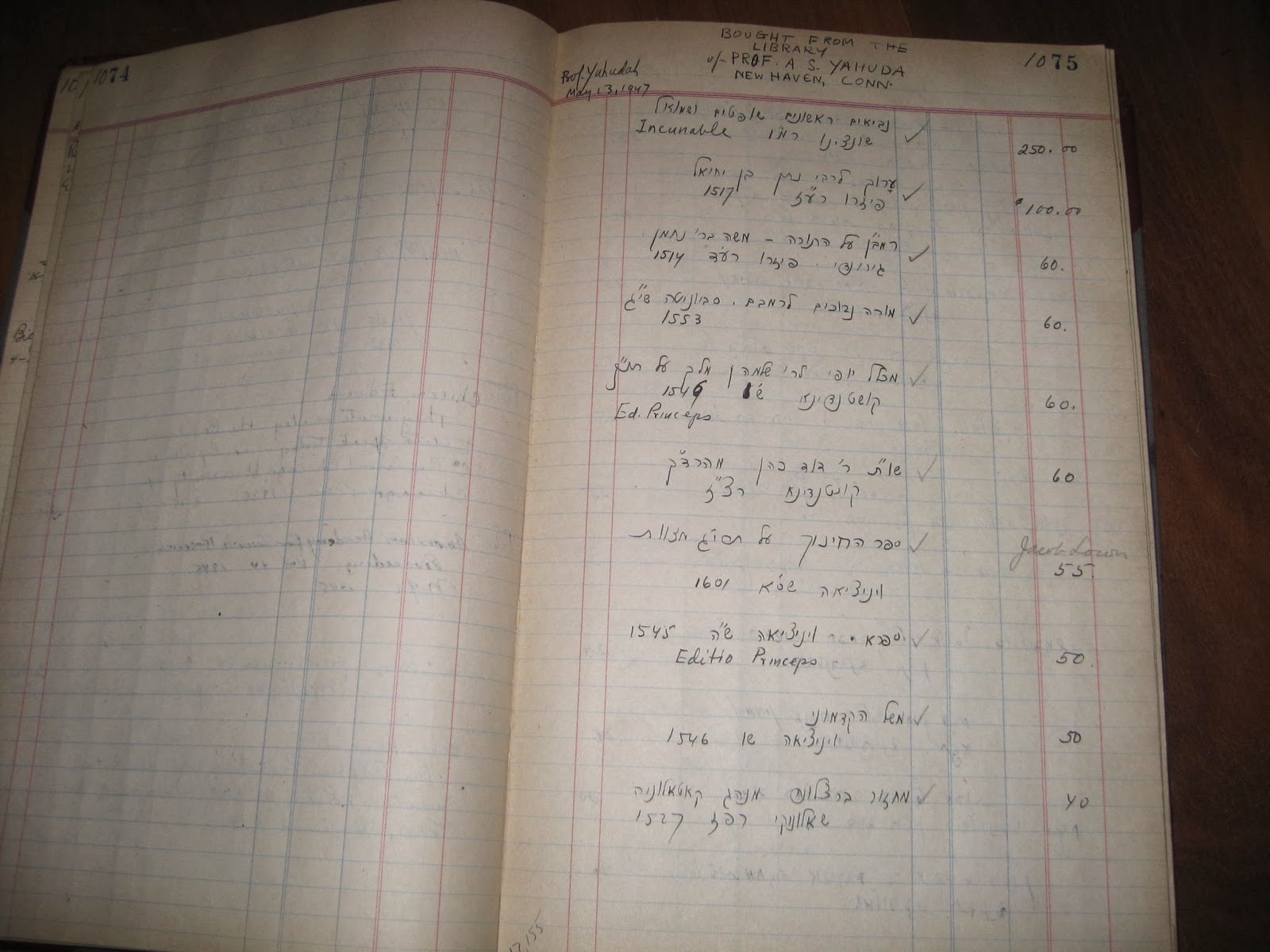
What shopping for incunabula was like in 1947, from a library ledger

With a large collection I just purchased came a ledger, 500 handwritten pages of recordings of purchases for a Northeastern Jewish College. Between the purchases of JPS and Bloch publications filed indiscriminately are some recordings that would make some of us drool.
May 13, 1947:
נביאים ראשונים שופטים ושמואל Soncino 1486 Incunabula $250
ערוך לרבי נתן בן יחיאל פיזרו 1517 $100
רמבן על התורה -משה בר נחמן גירונדי פיזרו 1514  $60
מורה נבוכים סביונתה 1553 $60
שו"ת ר דוד כהן מהרד"ך קושטנדינא 1533 $60
מחזור ברצלונה מנהג קאטאלונה שאלוניקי 1527 $40
the list goes on and on. For comparison,  see these 2 filed one after another in photos below
שות ישכיל עבדי  which was recently published at the time for $35
followed immediately by מגלת אסתר 1592 Venice for $30.
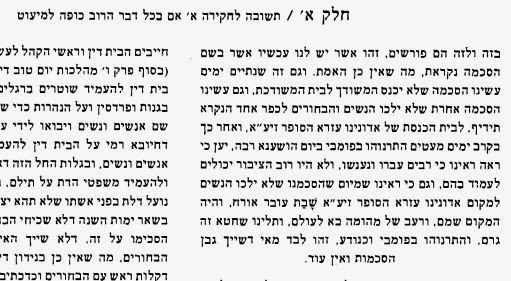
Forget about mourning on lost stock or real estate opportunities, anyone old enough to remember Harry Truman could have bought thousands of such books at these prices, many of which have had their value appreciate to over 25,000 %. Take the Ramban Pesaro for one example, I just paid a few months ago for a decent copy over 200 times the price they paid for it in 1947.


Sunday, November 10, 2013

The Conspiracy to accuse Rabbi Yaakov Eilenberg of PLAGIARISM in his תולדות יעקב printed in Fuerth, 1726

 תולדות יעקב printed in Fuerth, 1726

Rabbi Yaakov Eilenberg published a commentary on Yoreh Deah titled Minhah Belulah in 1729. At the end of his lengthy introduction the last paragraph alludes to a fascinating conspiracy against the author, Rabbi Yaakov Eilenberg.
Renaissance Hebraica Facsimile of Minha Belulah


The last paragraph of introduction 
Here is what the author writes:
אף שכבר מילתי אמורה בחיבורי ספר ישרש יעקב מ"מ גם בזה לא אנחתי ידי מלהודיע האי עובדא בישא שעבד לי האי חומץ בן יין הוא שמו ר אייזיק בן המחבר תפארת הקודש איך שנתתי לו שכרו להעתיק חיבורי תולדות יעקב ויודע היה בעצמי שאין לי פנאי לעיין אחריו מחמת עול התלמידים......ונטל את שלי אחת לאחת לערך שני בוגין וכתב דברים אחרים במקומו ולא ידעתי מבטן מי יצאו אלה הדברים. ובודאי כוונתו היה להבאיש ריחי בין הבריות.........
.......
He describes how in his previous book, Yashresh Yaakov, he has already mentioned it, but he will now state it again, how he paid Rabbi Isaac, the son of the author of Tiferet Yaakov to edit and publish his book. He says how this Rabbi Isaac, removed portions of the book and replaced them with other people's works in order that he be accused of plagiarism and cause his name to be hated among people. He requests anyone that finds in the book Tiferet Yaakov anything of his own, shall give him the benefit of the doubt that it was not his doing.

An interesting twist to the story is that the work of this author Yashresh Yaakov, where he states that he first discussed the story is unrecorded. No library is recorded as having the title in their collection and ben yaakov writes how he has never seen it.

Ben Yaakov on Yashresh Yaakov


How we lost the writings of the Magen Avraham, Rabbi Avraham Gombiner on Zevachim & Menachot


Renaissance Hebraica Facsimile of Magen Avraham 1732 Amsterdam
In the introduction to the works of Magen Avraham on the Tosefta, published by his grandson, in Amsterdam, in 1732, he details how the manuscripts of the Magen Avraham were distributed amomngst family members and others. He writes how the Magen Avraham, Rabbi Avraham Gombiner, wrote a commentary on Zevachim & Menachot as well, but the "hands of strangers have gotten control over it as a loan and it is now impossible to get it out of their hands to be able to publish it, to merit the people who want to quench their thirst for his writings"
Until today, these works have not been found or published.


A bibliographic oddity about this book is that the name of the author Rabbi Avraham Golbiner, is not mentioned in the book or on the title page, rather he is referred to as the בעל מגן אברהם.

Wednesday, November 6, 2013

Overreaction to Holocaust sensitivity on eBay - what items should be forbidden from being sold, a Refugee Haggadah?

About once a year, a journalist "discovers" some memorabilia from the Nazi Holocaust being sold on ebay and it gets in to the news again. Reuters published an article on some items they found for sale, including what was presented by the vendor as a complete Auschwitz uniform worn by a Polish baker who perished in the Nazi death camp.
Ebay hastened to reply, in a statement, eBay said: "We are very sorry these items have been listed on eBay and we are removing them. We don't allow listings of this nature, and dedicate thousands of staff to policing our site and use the latest technology to detect items that shouldn't be for sale.

"We very much regret that we didn't live up to our own standards. We have made a donation to charity to reflect our concern," said the company, which receives a commission on items sold and charges vendors a listing fee.

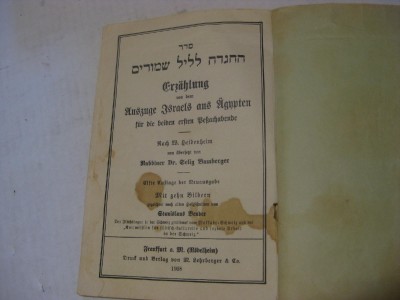
Problem is, where do you draw the line? An eBay employee called me up yesterday to inform me that one of my items available for sale on their site is being removed in response to the media attention. The item is a Haggadah published in 1943, an edition made specifically for Refugees from the Holocaust. It took about 20 minutes on the phone convincing the eBay employee that the purpose of the sale of an item like this is in fact to promote awareness of the Holocaust and its effect even on the lives of the millions of people who managed to escape and spent the war years with no home, guests in a country that did not want them. Museums throughout the world display such items as a way to promote awareness of the Holocaust. If a Nazi sympathizer is willing to pay a small fortune of money for such things, perhaps making him part with some money is a punishment in its own.
Note at foot of title-page: “Den Flüchtlingen in der Schweiz gewidmet vom Maccabi-Schweiz und der Kommission für jüdisch-kulturelle und soziale arbeit in der Schweiz.” translated as "Dedicated to the refugees in Switzerland by the Maccabi-Switzerland and the Commission for Jewish cultural and social work in Switzerland."


A "hieroglyphic" inscription in a copy of בן המלך והנזיר published by R. Moshe Hagiz


Facing the title page of a copy of Ben Hamelech Vehanazir edited and published by R. Moshe Hagiz appears a handwritten inscription, photographed above, which translates to
(אין לך אדם שאין לו שעה (פרק ד משנה ג אבות

hat-tip: Rabbi Moshe Plutchok